
We’ve all been there. You open a tab with the honest intention of debugging a structural layout or writing a project proposal. But then, a Slack notification flashes. An email pings. A fascinating article catches your eye.
Before you know it, forty-five minutes have vanished into the digital ether.
In modern knowledge work, our attention isn’t just drifting; it is actively being mined. The average professional changes tasks or checks communication channels every 6 minutes. This continuous fracturing of attention introduces a hidden productivity killer known as attention residue.
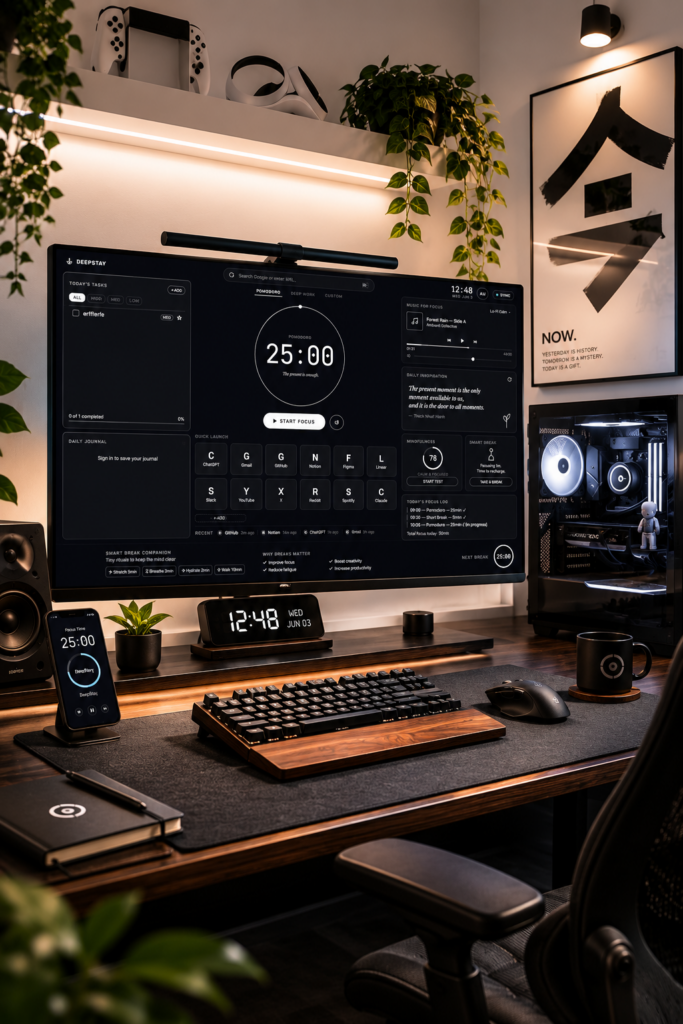
The Hidden Penalty of “Quick Checks”
When you switch from a complex task (like writing code) to a quick check of your inbox, your brain doesn’t instantly transition. A portion of your cognitive capacity remains tightly bound to the previous context.
“Multitasking is a myth. In reality, we are rapidly shifting our focus from one concept to another, burning through precious neural fuel every single time we make the leap.”
By the time you return to your primary objective, your mental clarity is severely degraded. To counteract this and access true flow states, you need an environmental framework rather than relying purely on fleeting willpower.
3 Pillars of an Unshakeable Focus Ritual
To protect your attention span, you need to transition from a defensive mindset to an offensive architectural setup.
- Time Boxing over To-Do Lists: Don’t just list your tasks; assign them a strict physical block on your calendar. If a task doesn’t have a designated time slot, it rarely competes against high-dopamine distractions.
- The 90-Minute Cognitive Ceiling: Human brains naturally operate on ultradian rhythms. Focus deeply for 60 to 90 minutes, then completely step away from screens for 10 minutes to reset your cognitive baseline.
- Aggressive Environmental Isolation: If a distraction is accessible within a single click, you will eventually give in to it when your energy dips. You must raise the barrier to entry for distracting websites.